Why does pie crust shrink in the oven?
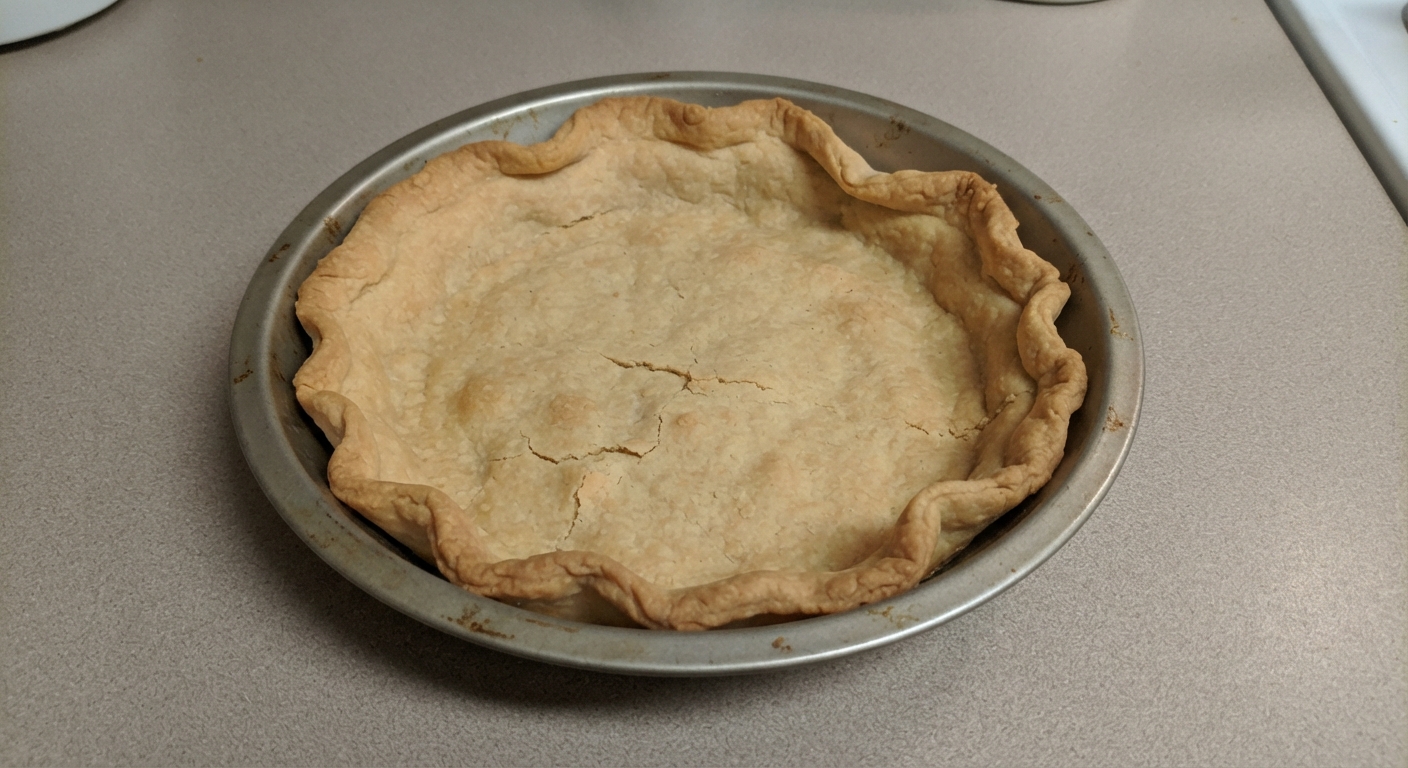
A crust that pulls away from the pan edge didn't do anything wrong on its own -- it's releasing tension you put into it earlier, plus losing fat it needed to hold its shape.
The kitchen answer
Stretched dough remembers being stretched. If it goes into the oven still tense from rolling and fitting, that tension releases as heat loosens the gluten -- and the crust pulls back exactly the way a stretched rubber band relaxes.
What's actually happening
Even a low-gluten pastry dough (see Fats & Dairy) has some elastic gluten network in it, and rolling or fitting the dough into a pan stretches that network. Gluten has real elastic memory -- it wants to spring back to its unstretched length. Cold dough is stiff enough to resist that pull, but oven heat softens the fat and loosens the network just enough for the stretch to release, pulling the whole crust inward and down as it happens.
Fat compounds the problem structurally: if it melts and runs out of the dough before the surrounding starch and any egg protein have set (see Structure & Crumb), the crust briefly has less to hold it rigid right at the moment it's most vulnerable to slumping and shrinking.
What does that mean for your recipe
Resting fitted dough in the fridge before baking isn't just about keeping fat cold -- it gives the gluten time to relax out of its stretched state before the oven, so there's less stored tension left to release once it's baking. Handling the dough as little as possible in the first place (see Fats & Dairy) means there's less tension to begin with.
What can go wrong
- Dough stretched to fit, then baked immediately: no time for gluten to relax before heat forces the issue.
- Dough overworked while rolling: more gluten developed overall means more elastic memory to release later.
- Warm kitchen, warm dough: fat softens toward melting before it even reaches the oven, giving the structure even less of a head start.
- Crimped edges pulled tight rather than rested in place: concentrates extra stretched tension right at the rim, which is exactly where shrinkage shows up most visibly.
Try it yourself
Same dough, one variable -- resting time:
- Fit two identical pie crusts into two pans.
- Bake one immediately.
- Chill the other for 30 minutes before baking.
Watch for: the unrested crust visibly pulling away from the pan edge and slumping down the sides, while the rested one holds its shape far closer to how it was fitted.
Go deeper
This is the same elastic-network idea covered in why over-proofed dough collapses, just triggered by mechanical stretching instead of gas pressure -- gluten doesn't distinguish between the two kinds of force, it just stores and releases tension either way.