Why does chocolate seize when melting?
A single drop of water can ruin a whole bowl of melting chocolate -- but a whole cup of cream doesn't. The amount of liquid is the entire difference.
The kitchen answer
Seizing happens when a small amount of water gets into melted chocolate -- just enough to make the sugar particles clump together, but not nearly enough to actually dissolve them. Adding plenty of liquid at once (like making ganache) avoids the problem entirely, for the opposite reason.
What's actually happening
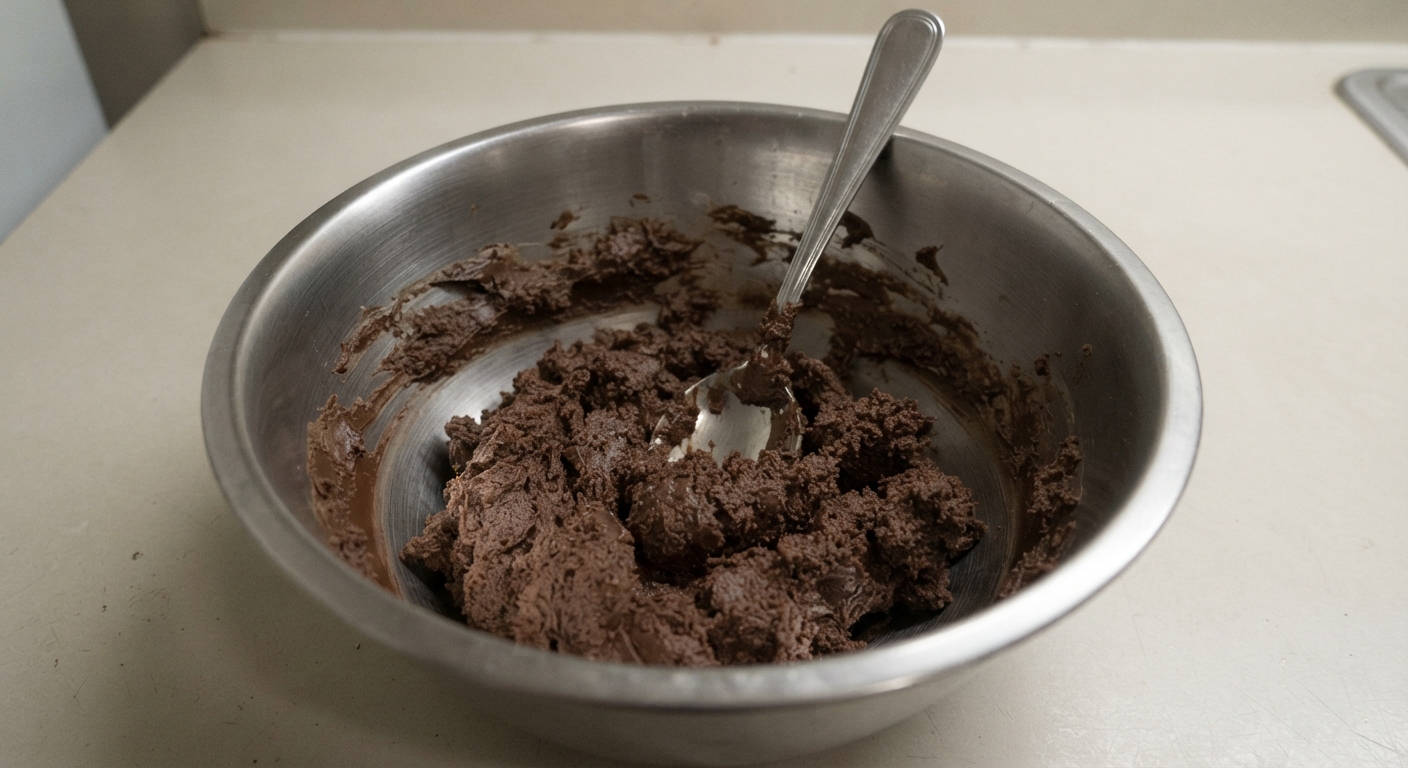
Melted chocolate is a suspension of fine sugar and cocoa particles dispersed in liquid cocoa butter -- normally, those particles slide past each other freely, keeping the chocolate fluid. A small splash of water isn't enough to dissolve those particles, but it is enough to form damp bridges between them -- surface tension pulls the wetted sugar particles into clumps, the same way damp sand clumps together instead of pouring freely. That's seizing: physically, not chemically, a texture change.
A larger, deliberate amount of liquid (cream, for ganache; milk, for a sauce) works completely differently -- there's enough of it to fully surround and disperse the particles again, rather than just barely dampening them, so the mixture stays smooth instead of clumping.
What does that mean for your recipe
There's no safe "small splash" of liquid to add to melting chocolate -- if you're adding liquid at all, add enough of it at once to fully disperse the particles, not a cautious trickle. This is also why steam (from an ill-fitting double boiler lid, or a wet bowl) is a common invisible culprit -- it's adding exactly the small, uncontrolled amount of water that causes the problem.
What can go wrong
- Water dripping from a double boiler lid: condensation falling into the chocolate below, unnoticed until it seizes.
- Melting chocolate in a not-fully-dry bowl: residual rinse water is enough on its own.
- Adding flavoring extracts that are mostly water-based: even a teaspoon of a watery extract can seize a small batch.
- Trying to "loosen" seized chocolate with a little more liquid: usually makes it worse rather than better, since it's still not enough liquid to fully redisperse the clumped sugar.
Try it yourself
Same melted chocolate, two amounts of water:
- Melt two identical small batches of chocolate.
- Add a few drops of water to one.
- Add several tablespoons of water to the other.
Watch for: the few-drops batch seizing into a grainy, stiff paste almost immediately, while the several-tablespoons batch stays fluid (though thinner) -- the same liquid, opposite outcomes, purely from quantity.
Go deeper
Seizing is a good everyday example of how a physical mechanism (particle clumping via surface tension in a small amount of liquid) can look identical in outcome to a chemical failure but have nothing to do with heat, ingredient quality, or cooking technique -- it's purely a liquid-quantity problem.